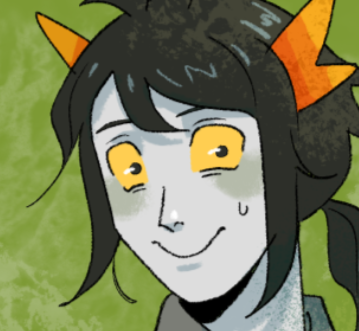


Concluding the history of Uesugi Karkat from the Shikikan era: The Battle of Fearoyama is a seminal turning point in the history of the East Alternian Restoration era. It was simultaneously the end of Troll Edo's anti-Imperial resistance in the region, the official beginning of the Restoration era, and the final battle that resulted in the death of the Shikikan Uesugi Karkat. Prior to the battle, the Shikikan urged his followers to depart, insisting that their deaths would be unnecessary and brutal if they remained. However, so steadfast was the resolve of his allies, especially those he had stood beside many sweeps ago during his era as the Nobushii, that they would not be deterred from following him into death. The Shikikan was forced to begrudgingly accept their deaths. It is said that he engaged in one secret, clandestine tryst in the dead of light just before the battle. Though no written records were made from the Shikikan himself, the journal of the Mikkaddo provides sufficient allusion to the event to indicate that he was the one that met with the Shikikan to parley before they met in open war. In spite of all that they had shared as moirails, the Mikkaddo was unable to be swayed from his allegiance to the new heiress. Resigned to this, the Shikikan asked a single favor of the Mikkaddo to be repaid the very next night. When the battle began at first dusk, the Imperial forces had already surrounded the rebel encampment. Their superior weaponry and soldiers outnumbered their forces sixty to one. As they encroached upon the rebel forces, a charge led by the Shikikan Uesugi Karkat himself broke through the vanguard and inspired his warriors to charge in after him. This, however, was not the element that gave them their advantage. In an act of unprecedented strategic planning, the Imperial forces were awed by the sudden and seemingly divine dimming of the sky. The Pink Moon had disappeared behind the Green Moon, and the Green Moon had been hidden from the sun by Alternia. The Imperial army was briefly but critically cowed into supernatural terror as the Shikikan's rebel forces charged forth through the penumbra of a Bilunar Total Eclipse. The Imperial forces, taken aback by this phenomenon, suffered greatly for their hesitation. The first waves were cut down in the Shikikan's charge and many more routed near-instantly. It was only at the very end of the twelve-minute eclipse that a searing beam of bright white light illuminated the battlefield and speared the Shikikan through the pusher. In an act of monumental betrayal, the Mikkaddo, who had waited in hiding with his reserves, struck from the high ground to grievously wound his former moirail. As he lay dying, the Shikikan watched the Mikkaddo approach after carving through his retainers, the wound instantly cauterized by the beam weapon's passage so as not to reveal the color of his blood. The Mikkaddo's journal says that in a final moment of pale solidarity beyond the echoes of eons past, the two moirails-made-mortal-enemies locked eyes, shared a nod, and wept bitter tears before the Shikikan's body was completely obliterated. Thus ended the Shikikan's Rebellion, and the life of Uesugi Karkat. It is unclear if the Shikikan knew that this event of extraordinary celestial happenstance would be of strategic value to his forces during the battle itself. What is known, however, is that in spite of the otherwise nebulous timeline of events spanning Uesugi Karkat's appearance in Trollshiwara to his death at the Battle of Fearoyama, the fact that a bilunar total eclipse occurred at the moment of the battle's commencement offers historians a uniquely exacting precision of its chronology. Eclipses, like other astronomical phenomena, are governed by mathematical trajectories that follow consistent patterns across time. It is therefore possible to determine via a priori deduction exactly when and where the Battle of Fearoyama began and ended all the way down to the very minute. Though much of the Shikikan Uesugi Karkat's life still remains a mystery to this night, the Uesugi Karkat Historical Preservation Foundation can declare with absolute, unerring certainty that the time of his death was at [T̵̢̡̡͍̜͓̼͈̠̙̩̉̐̋̃̈͋́̉̑́̄I̴̫̣̬̐̍̈́͘M̸̨̖͍̭̞̥̣̠̩̩̦̹̫̬̀̏̿̂̓̐̒́̆Ȇ̷̢̛̜̻̜̘̦̞̦̱̠̘̺̻̝̱̺̖͐͂̓͋͐̇̽̈́͌̿͆̕ ̸̛̝̭̻͈̦̤͎̝͙͖̖̖̞͇̝̻͋̿̓̌̇̒̄̎̔͋́̀̌̕̕ͅŔ̵̺̾͒́̊͑Ȩ̵͇̦̘̎̽̂̽͋́̀̃̋́̕͠͝T̵̡̛̜͈͎̜̤̠̖̗͍̞̥̃͐͛͌̒C̷̳͍̦͉͈̭͈͚̄̾̐̑̍̈́͝O̴̡͔͔̟̖͓̝͉̻̭͓̩̱̜̣͑͒̈́͐͜ͅŃ̵͉̳̬̮̦̰̞̝̊͑ͅ.̸̜͉̥̬͚̤͇̳͎̮̤̳̠͖͕̠̀͐̾̈́̂̃̔͛̀̓ ̸̨̨̲̯̣̣̺̝͙̠͇̰͎̓̏͆̉͐̈D̵̡̢̻͎̙̜͆͂̄̍́̍͒̈́̄̀̊͐͘͜͠Ë̴̢̧̜̩̬͚͈̱͖͇̟̈́̀̈́S̴̨̡̫̜͎̩͚̦̈̈́̓͘T̶̨̢͇̩̩̞̹͉͉̯̟͖͈̱̬͗̒̀̆͐̾͜ͅÏ̴̡̭͉̜̘͕͝͝Ň̸̛̼̼̠̩̀͋̑̄͗A̷̲̖͚̞̩̗͐̈́̊̓̈̈́̾͆͂̐̒̓͂́̃̕͝T̷̲̫͎͖͎͈͈̲́̉̎̓͊̾̓̉̈́̅̑͒̋̀͜͜Ĭ̵̡̛̞̼̫̦̯͍̳͐̽̅̒́̏̓̽͗͜͝Ö̴̡͍̭̬̹̰͎̖͙̤̱̱̤̪̑̏̋͂̓̈́̓͋̆̓̉͠͝N̷̯̭̮̽̏́̌̐̄͋͘ͅ.̶̹̞̩̪̩̺̩͈͒̉̽̆͌̕ͅ ̴̥̖̼͍̳̒̒́̎̀͒̐̑̈́̊̓͛̚͜͠͝T̴̢̙͖͇̠̱̮̹̱̙̖̻͉̩͐̆̈́̄͜Ṟ̶̢̧̡̟̳͙̺͚̺͚̫̩̼͙̦̭̈̂͝Ä̴̧̢̟̣̣̫̀͂̐̆̏̈J̶̘̺̐Ḙ̶͚̘̑C̴̡̦̳̲̜̱͍͈͈͚̰̙̣͙̟̥͕̿̄̾̿̀͌T̴̡̹̯̣͇͖̮̩͙͍͈͚̟͖̊͊̀̏̀́͂̃̒̔̀͆̚͝͝͝O̷̧̤̼̓R̸̟̯̽͋͘͘͝͝Y̵̳͙̏͐.̸̟͈̲̪͓͕̌̊̿͂̆́̔̃̄̈́̋̕͘͝ ̴̤̥͕̘̰̬͓͕͖͓̻̠̞͉͂͌̈̏̋͝Ȧ̶̟̯͍͗͋̄̀̽͆̑́͑͂̏G̶̘͍̰͍͈̤̋̽̈ͅR̴̘̱͎̥̲̗̫̟͚̠̖̜͎͗̈́͋̏͊͘͝E̵̥̍̋̃̾̂̓̊͆́̑͒̑͝͠͝Ę̴̮͈́́̄̍͐̈́̂̾̅̂͗̑̔̕͠͠M̶̨̡̧̮͔̗͚̭̖̺̬̙̹̻̫̅͒̆̽͛̈̕E̴͙͕͆̔̀̓̋̽̽͛̂̅̕N̷̡̺̪̰̭͈̗̝̅̐̑͋̀̿̾͜T̸̨̰̥̹̂͒͌͋.̴̢̡̳̦͎͇̫͖̤͎̯̹̺̪̋̒̅̄̔͜ͅ ̷̠̀̈́̃̐̑̓̈́G̶̞͖̬̀͗̿́̏͐́̂̌̒̔́͛̃̆̊͝Ȩ̵̟͙͎̹̝͙̥̠̭̝͓̖̜͆͛͑͐͋̐͜T̴̢̻͖̞̬̪̬̟͍̰̩͈͓̱̉ͅ ̸̡͉̺̠͓͓̺̦͙͍̤̿H̶͇̯̘̦̰̣̺̝̫̮̜̽̄̎̎̀̓̒͋͝͝͝I̵̢̨̧̘̯̫̻̦͔͉͍͉̦̔̽̾̇͑͗͐̑̍̊̕̕͜͠M̵̤͉̬̳̰̪͖̳͍̩͔̳̱̫̉̏̓̊̀̈́̔̿̾͜͝ ̴̨̝̺̺̦̩̓̄̇̈̽͐̉͘͘N̶̬̩͎̭͕̩̠̖̽̅̑̅̓̌̎̐̂̓̏̌͌͘O̶̧͔̝͈̼̤͍͔̝͔͓̜̣͉̠͊̂ͅͅW̸̢̛̰͓̳̦̗̐̐́.̸̺͇͙͊̈͗] As for the Mikkaddo, whose exhumed journal allowed for the corroboration of some of the more fantastical elements of the Shikikan's conclusive ending, the veracity of events described cannot be taken as holistic fact. His writing style was particularly florid and dramatic, even for a royal dignitary of the era. As such, it cannot be inferred with certainty that the Shikikan's death was truly premeditated the light prior in that furtive meeting between the two, and that his death at the Mikkaddo's hands allowed him to disappear from existence without the color of his blood ever being seen or his head ever being captured. It is the pure pale ardor between the Shikikan and the Mikkaddo that naturally draws so much interest from the common laytroll to the history of Uesugi Karkat. Many plays, songs, historical television dramas, and East Alternian manga series have adapted this historical account into a popularized fiction. The Foundation seeks to distinguish fact from fiction. However, it is for the sake of emphasizing the cultural significance of the Saga of the Shikikan Uesugi Karkat that the Foundation acknowledges that despite the fact that all evidence determines the relationship between the famed courtesan, actor, rope-master, rebel leader, and romantic poet and his deeply conflicted, royalblooded moirail to be of determinately solid pale fidelity in all respects without the slightest hint of vacillation, the single most profound impact of this historical account is on its adaptation within the community of East Alternian media-obsessed internet perverts known as "fujoshi," who ceaselessly delight in arguing that the two trolls were the most quadrant-smearing flushmates of all time. It is through this lens that the Saga of Uesugi Karkat survives as a debatable historical fiction in this niche community, who revere it as one of the oldest epics in the genre that they so odiously call #rankbait. The Uesugi Karkat Historical Preservation Foundation does not condone this. Thank you for reading. We hope that this was educational and enlightening to the Chittr community. https://cdn.imgchest.com/files/ef45720d8121.png https://open.spotify.com/track/2aL4Dr516WsEswstjfnyYr?si=2b475268653f49b0 #uesugikarkat