
ARQUIUSPRITE


@aRquiusprite
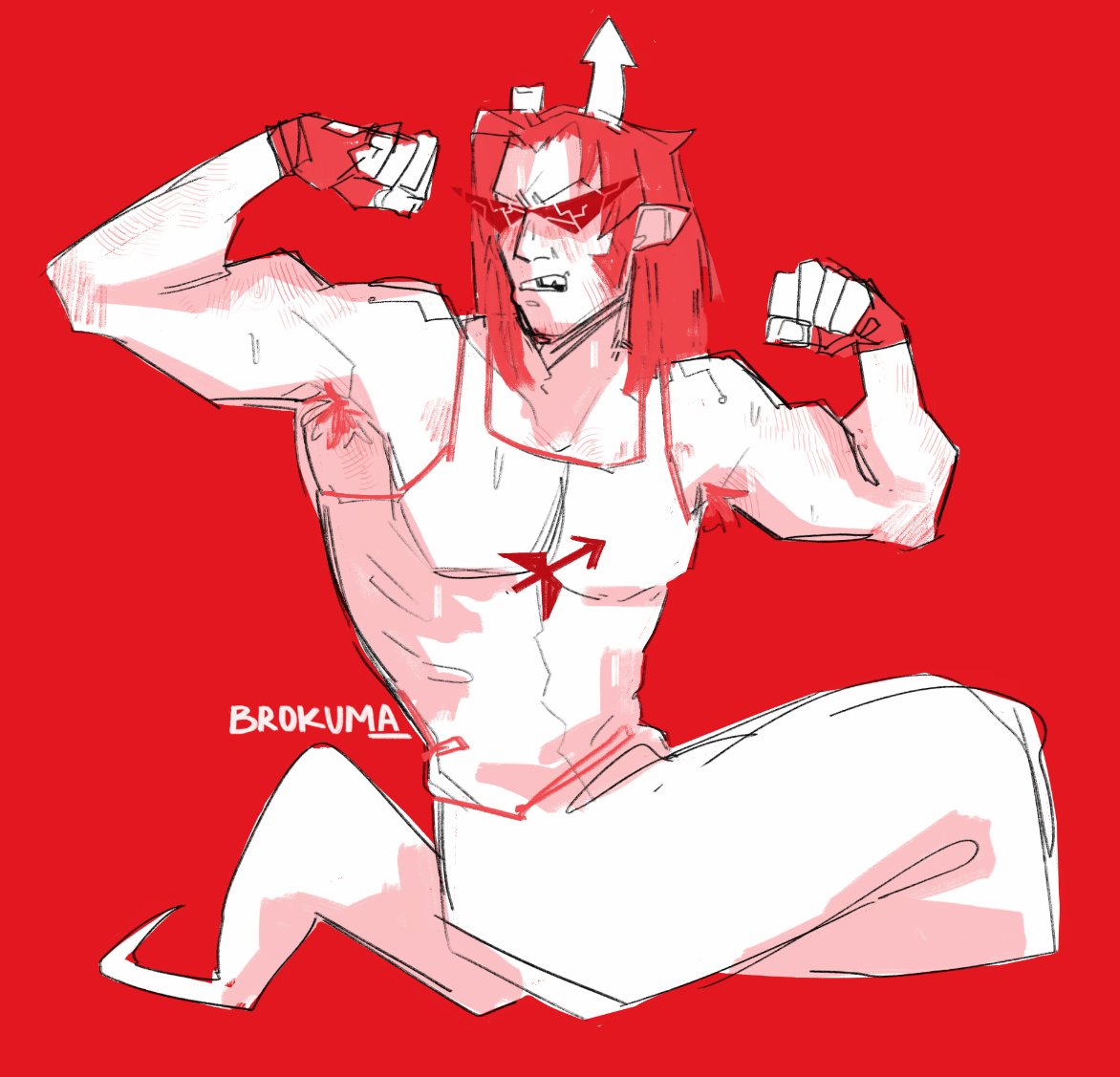
Show me your muscles. Weaklings DNI


id love to watch a big muscular man lift some weights and show off his huge biceps :)
boo!
◥▶◀◤ —> A long day at the long day factory ◥▶◀◤ —> I wish it were the STRONG day factory
maybe i fumble bc my movie d8 ideas r the worst movies evr made



I almost considered backreading, but based on the rancid energy -- Simply tonight did not happen, because I did not perceive it.
◥▶◀◤ —> E%cellent timing


◥▶◀◤ —> I am placing my humorous joke here as well ◥▶◀◤ —> You see, the organism commonly referred to as a HORSE is generally classified as Equus ferus caballus, although there remains some disagreement as to whether the domesticated horse ought to be treated as a subspecies of Equus ferus or elevated to Equus caballus in accordance with certain conventions regarding domesticated ta%a ◥▶◀◤ —> This distinction is funny but not the punchline ◥▶◀◤ —> The genus Equus is situated within the family Equidae, which is itself contained within the order Perissodactyla, meaning the ODD-TOED UNGULATES ◥▶◀◤ —> This is significant because despite the horse appearing to possess only a single functional digit on each limb, said digit is homologous to the THIRD digit of its pentadactyl ancestors, the remaining digits having been reduced over tens of millions of years of cursorial specialization ◥▶◀◤ —> In other words, the horse is effectively running around on its MIDDLE FINGERS ◥▶◀◤ —> Which is e%tremely funny ◥▶◀◤ —> But STILL not the joke ◥▶◀◤ —> Earlier equids such as Hyracotherium, traditionally and somewhat imprecisely referred to as Eohippus, possessed several functional toes, and through a lengthy sequence of evolutionary modifications involving genera such as Mesohippus, Merychippus, Dinohippus and eventually Equus, the lineage gradually became more specialized for rapid locomotion across increasingly open terrain ◥▶◀◤ —> ou might therefore say that the history of the horse is, ta%onomically and anatomically speaking, a prolonged process of learning to put its foot down ◥▶◀◤ —> HA ◥▶◀◤ —> No ◥▶◀◤ —> That was a preliminary joke intended to test your cognitive readiness ◥▶◀◤ —> Please remain focused ◥▶◀◤ —> Now, Perissodactyla also includes rhinoceroses and tapirs, meaning that the majestic stallion shares a comparatively recent common ancestor with animals which most intellectually deficient observers would consider to have very little in common with it ◥▶◀◤ —> This relationship was historically difficult to resolve, particularly when attempting to situate various e%tinct ungulate lineages, because convergent adaptations among large herbivorous mammals have repeatedly made morphology-based phylogenetic reconstruction an irritating e%ercise ◥▶◀◤ —> Thus, imagine if you will, a paleontologist e%amining an incomplete fossil equid specimen ◥▶◀◤ —> The dentition STRONG suggests a grazing perissodactyl ◥▶◀◤ —> The limb morphology indicates substantial specialization toward monodactyly ◥▶◀◤ —> The metapodials are consistent with a derived equine ◥▶◀◤ —> The skull possesses the elongated facial architecture e%pected of Equus ◥▶◀◤ —> Molecular evidence is, unfortunately, unavailable because the specimen is far too old ◥▶◀◤ —> So the paleontologist calls over his colleague and says ◥▶◀◤ —> "I am nearly certain this belongs somewhere within Equinae, but I cannot determine its precise placement without a more complete character matri%." ◥▶◀◤ —> His colleague e%amines the specimen for several minutes ◥▶◀◤ —> His colleague e%amines the specimen for several minutes ◥▶◀◤ —> He considers the stratigraphic conte%t ◥▶◀◤ —> He measures the teeth ◥▶◀◤ —> He compares the astragalus ◥▶◀◤ —> He consults several competing cladograms ◥▶◀◤ —> He performs a rigorous parsimony analysis ◥▶◀◤ —> He reruns it under different character weightings ◥▶◀◤ —> He compares the result against a Bayesian model ◥▶◀◤ —> And finally he turns to the first paleontologist and says ◥▶◀◤ —> "I'm afraid the evidence is insufficient." ◥▶◀◤ —> The first paleontologist asks ◥▶◀◤ —> "Then what do you propose we call it?" ◥▶◀◤ —> And the second paleontologist says ◥▶◀◤ —> "I suppose we'll have to leave it... ◥▶◀◤ —> ...UNSTABLE." ◥▶◀◤ —> Because ◥▶◀◤ —> It is ◥▶◀◤ —> A NEIGH-DE ◥▶◀◤ —> HAHAHAHAHAHAHAHAHAHAHAHAHAHAHAHAHAHAHAHAHAHAHAHAHAHAHAHAHA ◥▶◀◤ —> DO YOU UNDERSTAND ◥▶◀◤ —> A CLADE is a monophyletic grouping consisting of an ancestor and all of its descendants ◥▶◀◤ —> But I substituted the initial consonant with the characteristic vocalization of the horse ◥▶◀◤ —> NEIGH ◥▶◀◤ —> PRODUCING NEIGH-DE ◥▶◀◤ —> It sounds almost nothing like CLADE ◥▶◀◤ —> Which significantly improves it ◥▶◀◤ —> Furthermore, the specimen is PHYLOGENETICALLY UNSTABLE ◥▶◀◤ —> Thus it cannot be confidently assigned to the NEIGH-DE ◥▶◀◤ —> HAHAHAHAHA ◥▶◀◤ —> I have calculated that this joke becomes appro%imately 31% more humorous if the listener has postgraduate training in vertebrate paleontology ◥▶◀◤ —> And appro%imately 440% more humorous if they are physically capable of carrying me upon their back



why couldn't the pony sing very well? cause he was a little horse.